
Fraud Detection System
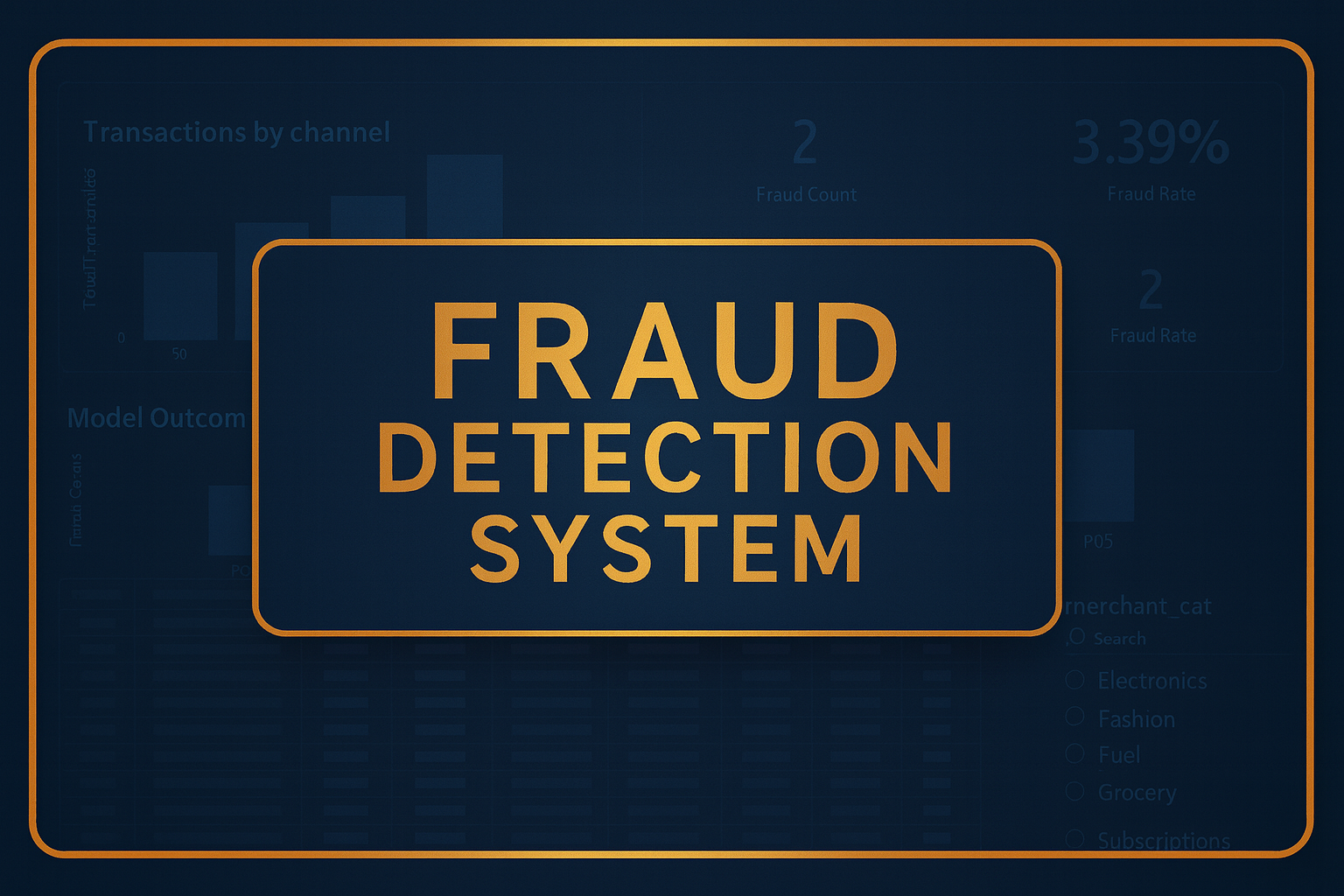
Real-time monitoring and triage of suspicious transactions using Power BI — highlighting risk scoring, precision, and analyst queue performance.
Problem
Fraud losses were increasing while genuine customers were being flagged. Executives lacked a consolidated view of fraud rate, precision, and risk concentration. Analysts needed a triage dashboard that prioritized the highest-risk transactions for faster review.
Data & Sourcing
- Synthetic transaction data across POS, Web, and App channels.
- Regions: US, GB, CA, GY, TT, JM.
- Merchant categories: Grocery, Electronics, Travel, Restaurants, Fashion, Fuel, Subscriptions.
- Fields include
risk_score,is_fraud, andflagged_by_modelto simulate scoring behavior.
All data is synthetic and safe for public demonstration.
Approach
The solution used Power Query to simulate realistic transaction records and DAX to build key performance measures such as Total Transactions, Fraud Count, Precision, Recall, and F1 Score. The Power BI report was structured into three key views: Overview, Risk Distribution, and Analyst Queue.
Results & Impact
✓ Fraud Rate: 3.39%
✓ Precision: Shows the share of correctly flagged frauds among all flagged cases.
✓ Analyst Efficiency: Queue view focuses attention on top 3–5% high-risk transactions, reducing review fatigue.